May I Give You a Hand brings together seven artworks that explore how we relate to one another, to ourselves, and to our environment in today’s world. Our movements through the world are deeply connected to our memories, thoughts, and past experiences, and we are profoundly shaped by our social surroundings and collective histories. The term “collective memory”(1) refers to the shared cultural and societal contexts that bind groups of people together. Yet in a digital society, we must ask in what ways such shared memory exists. And it leaves us with the question of how we extend a hand in the present moment.
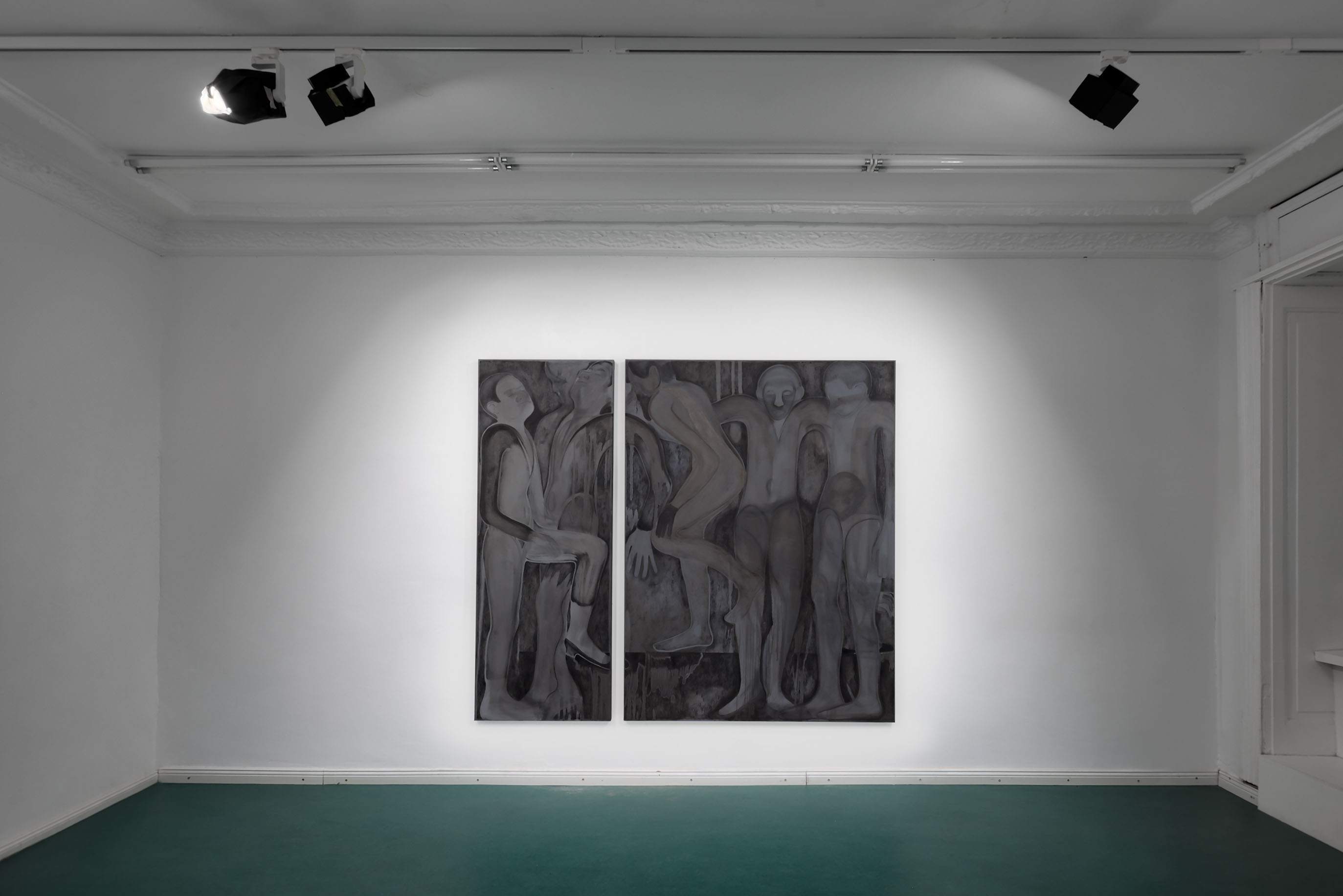
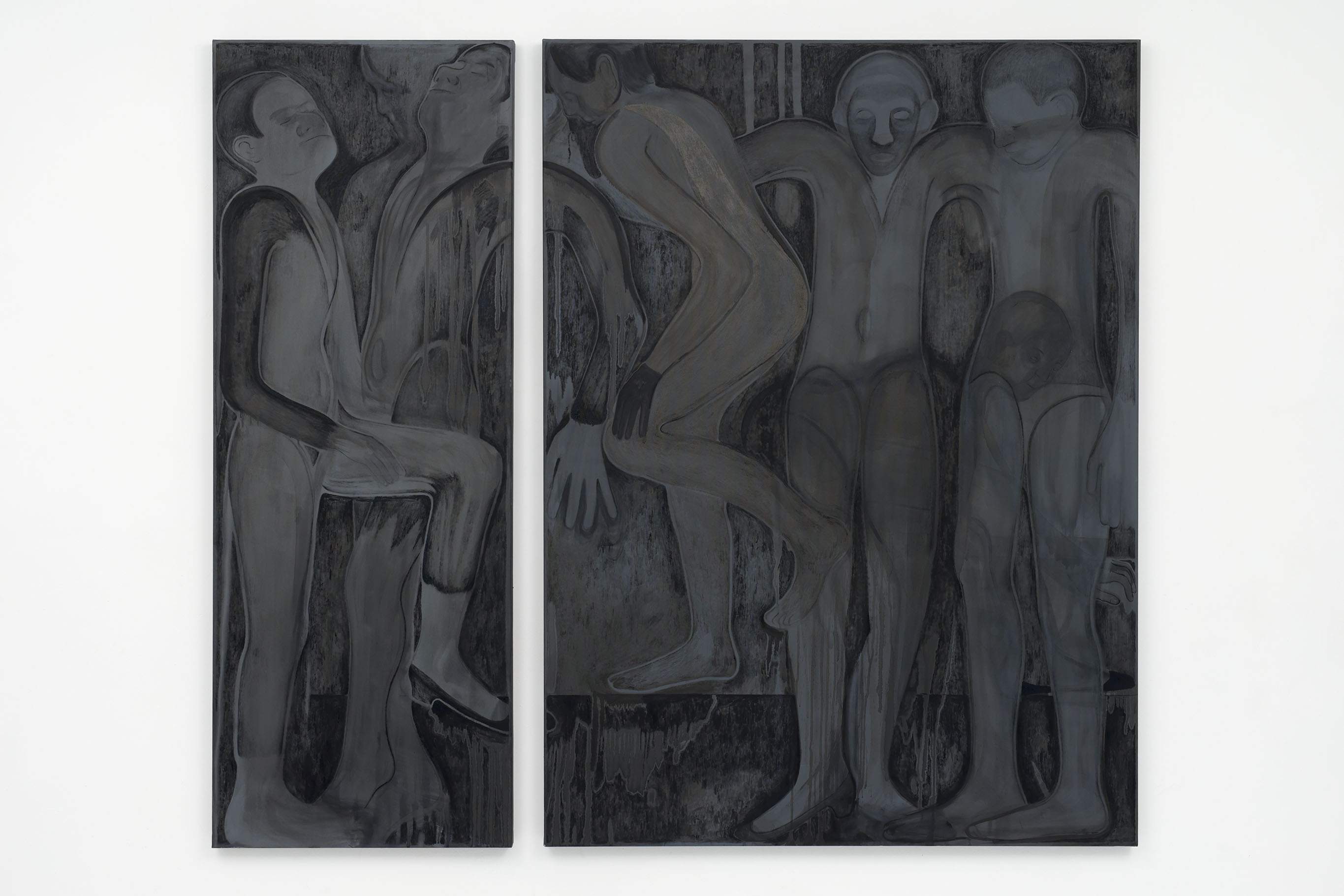
The first work we encounter is Untitled (N.I.T.A.) by Eliza Wagener, where abstraction becomes an act of gentle withdrawal. Figures blur, dissolve, and drift toward each other. The tension between these bodies emerges through our own gaze: the memories we carry, the gestures we recognize, the intimate traces of human interaction we read into their forms.
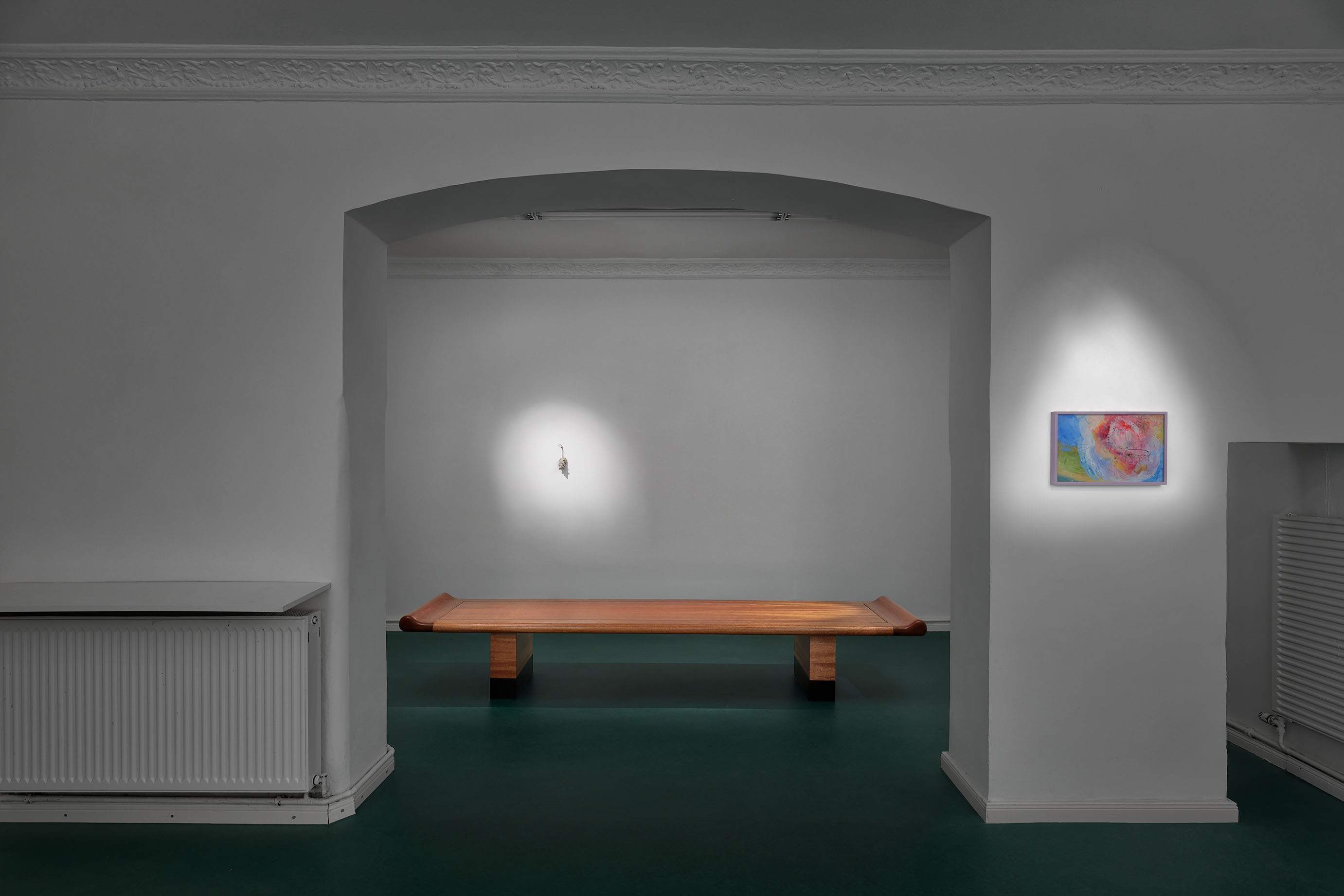
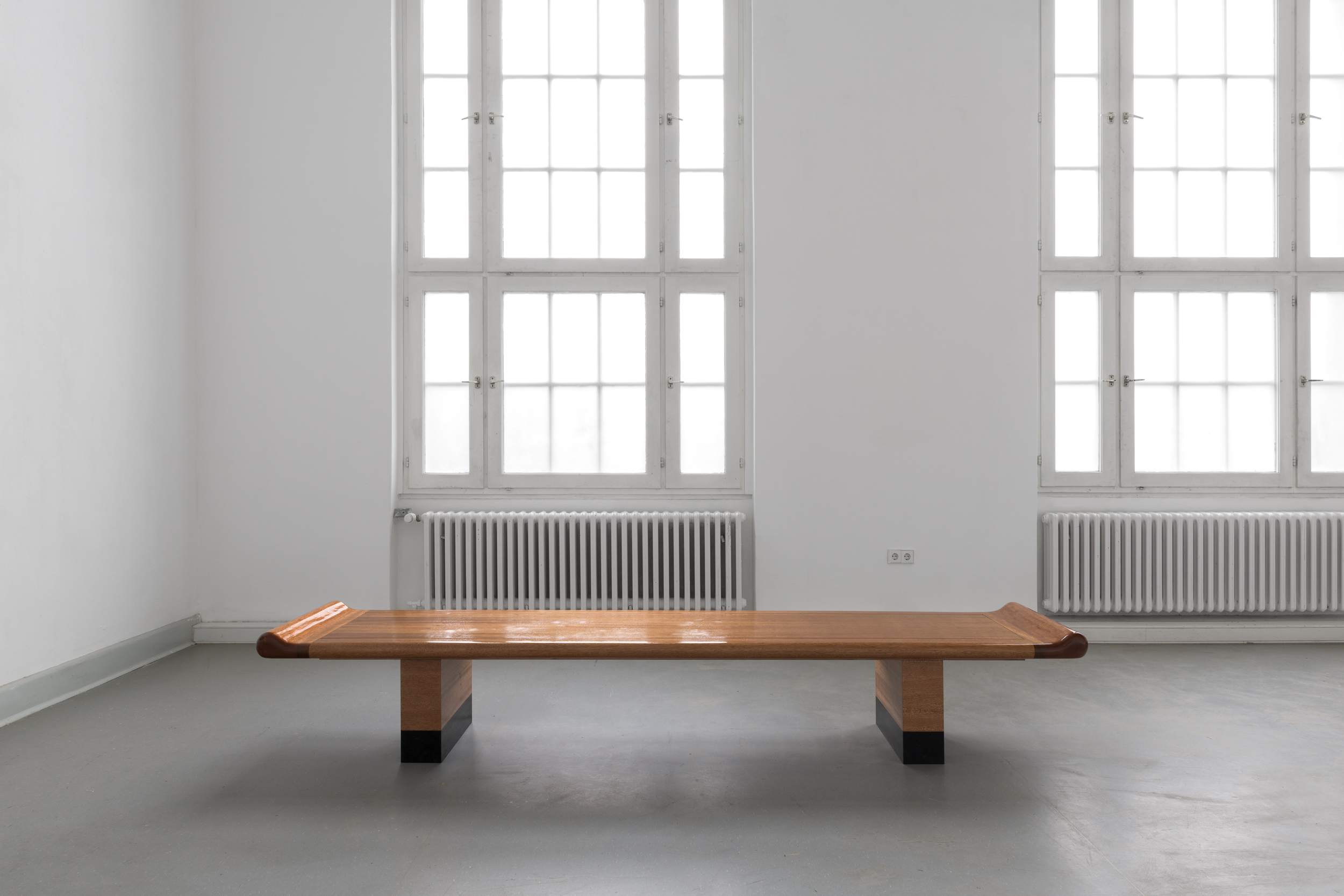
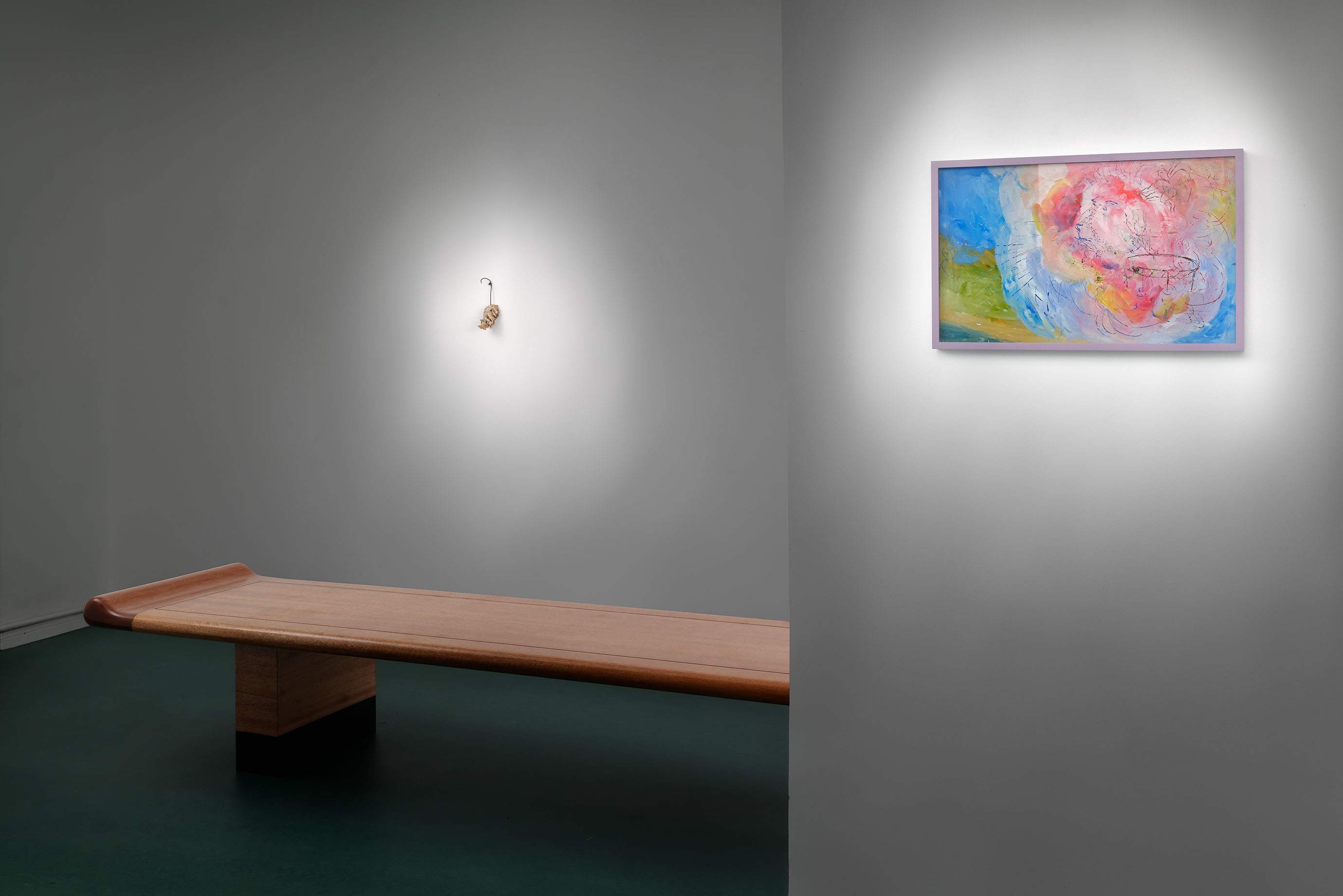
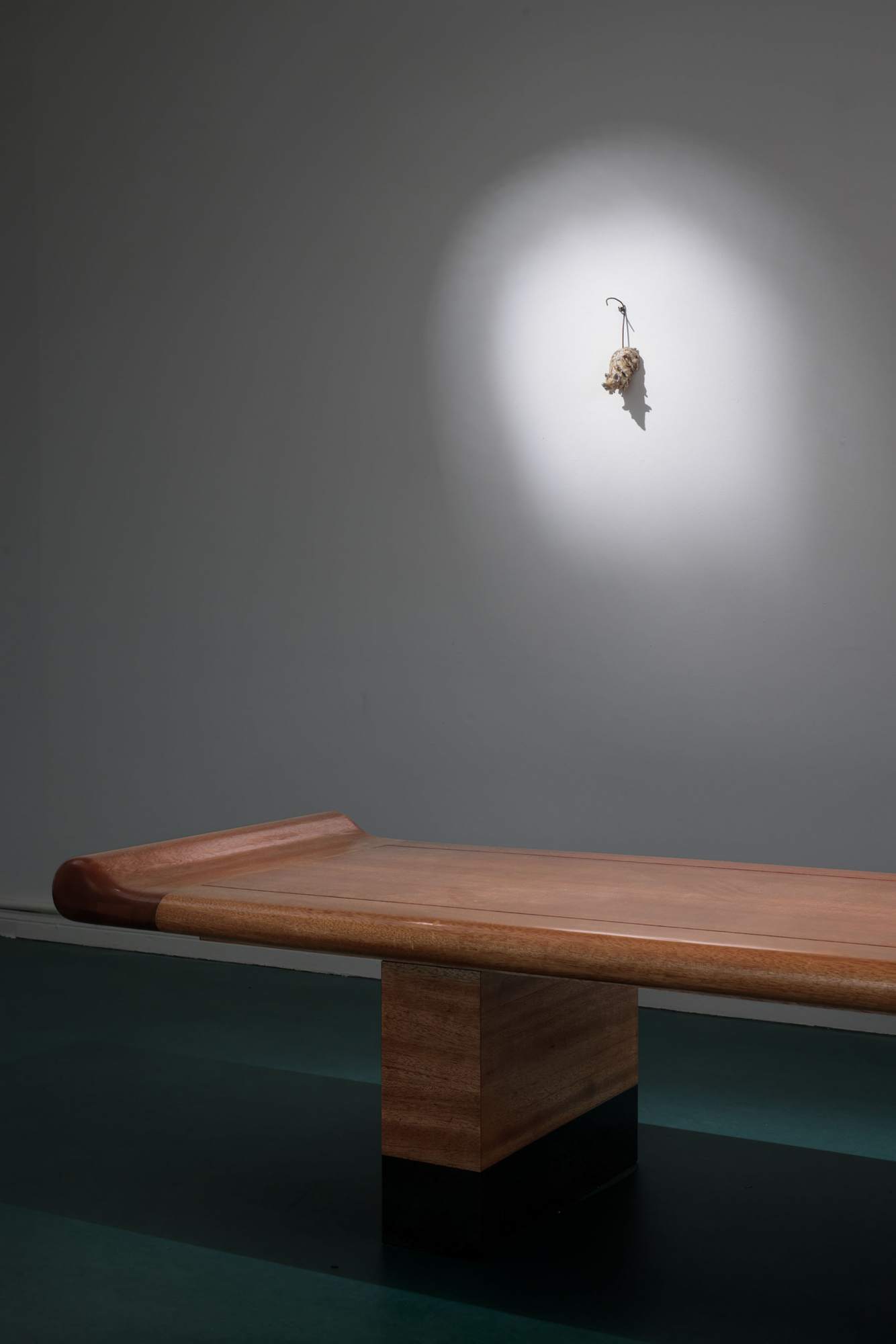
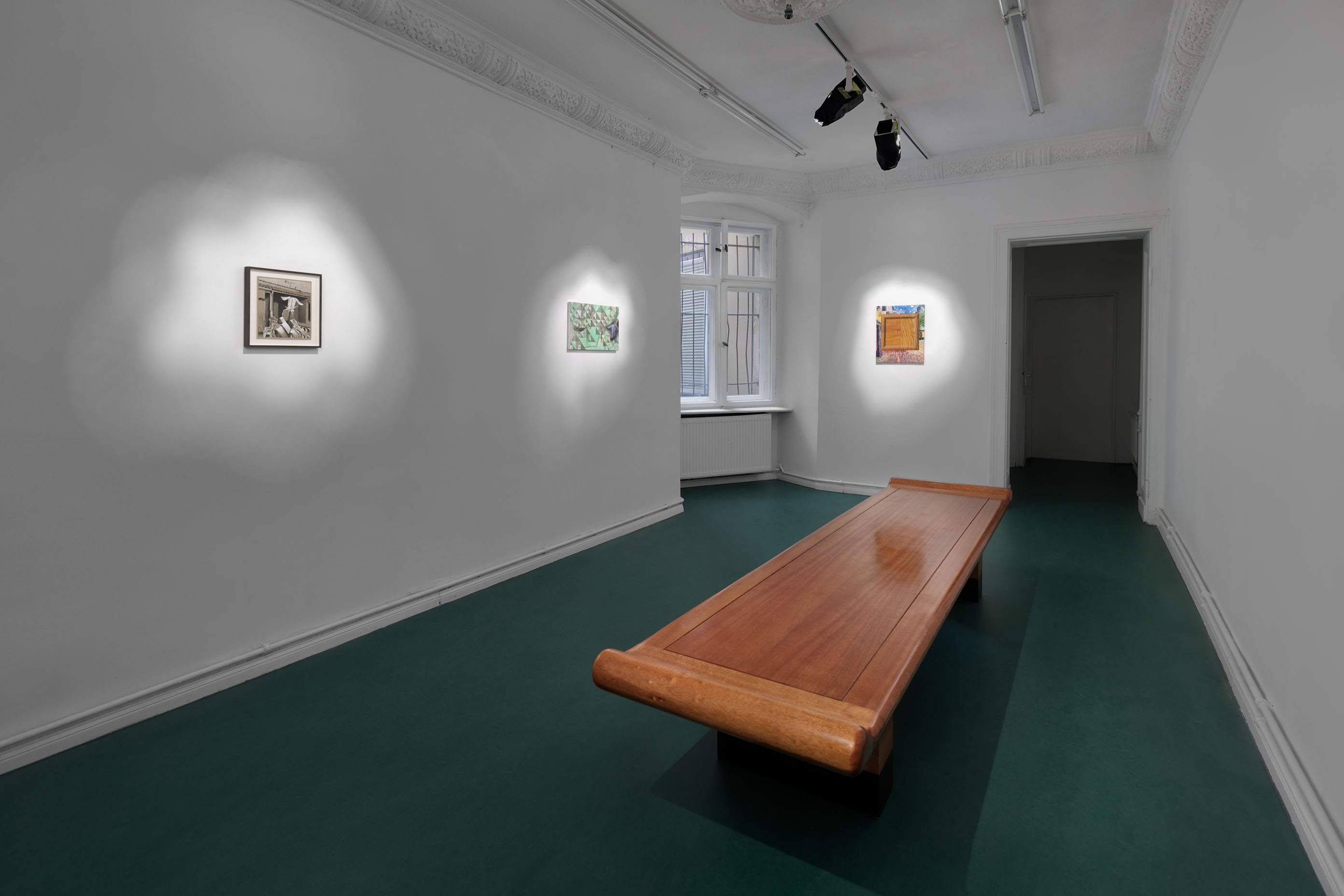
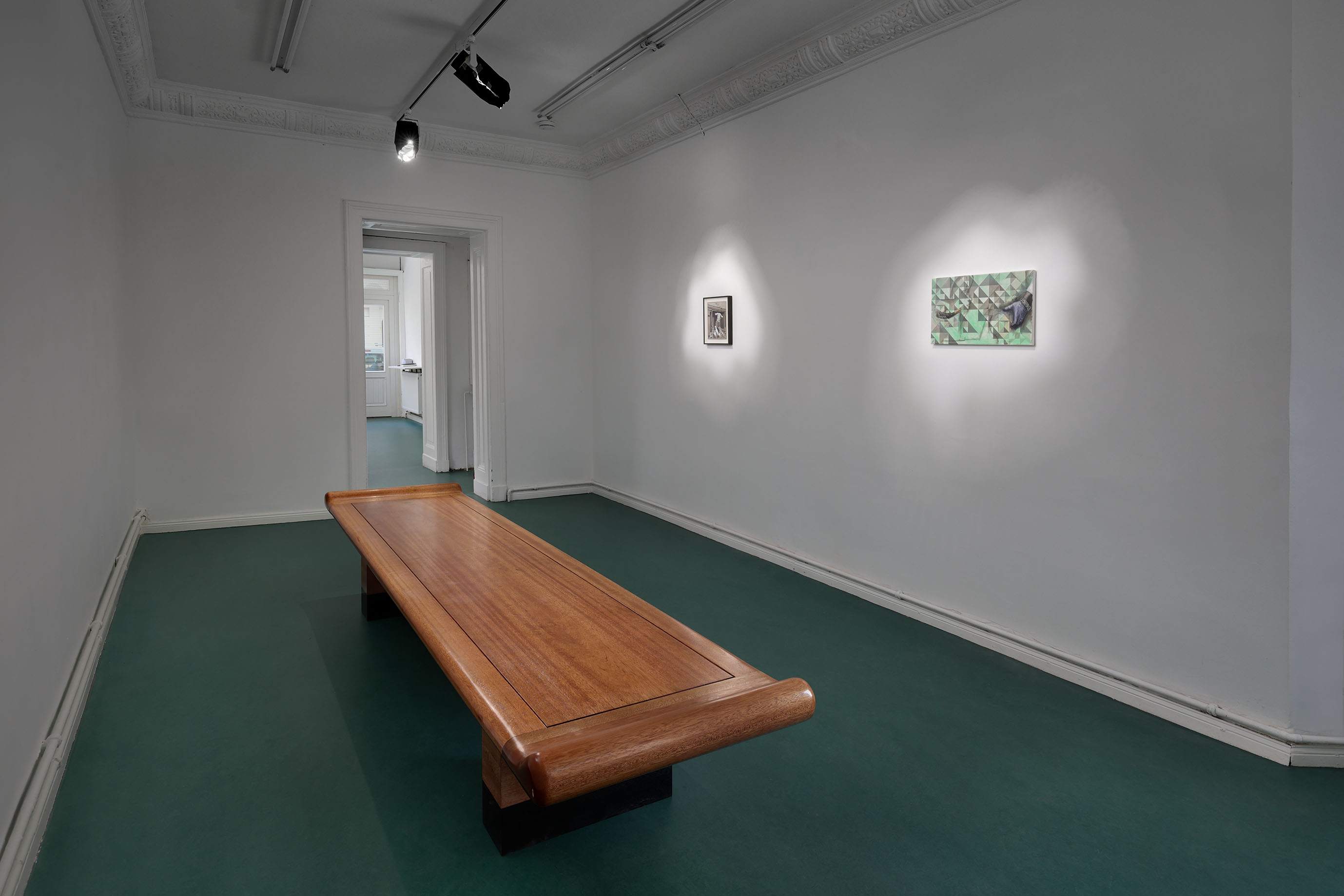
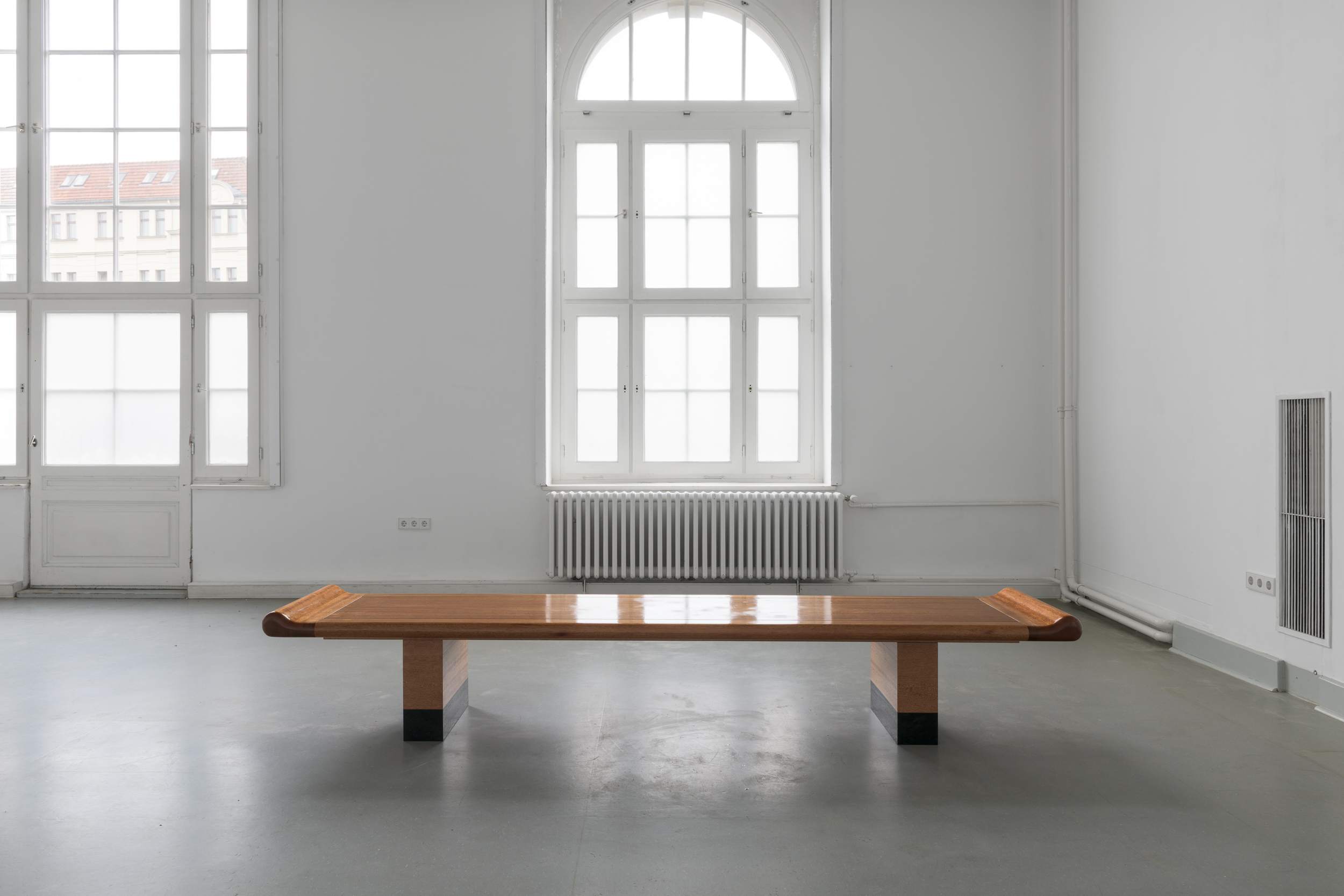
In front of the painting stands Miriam Umín’s bench, an exact replica of the one found in the Gemäldegalerie’s exhibition halls. Removed from its original context, this functional object becomes an artwork in its own right, shaped both by the institution and by the artist. And yet, it remains what it always was: a place to sit, to rest, to linger while looking at the works around it.
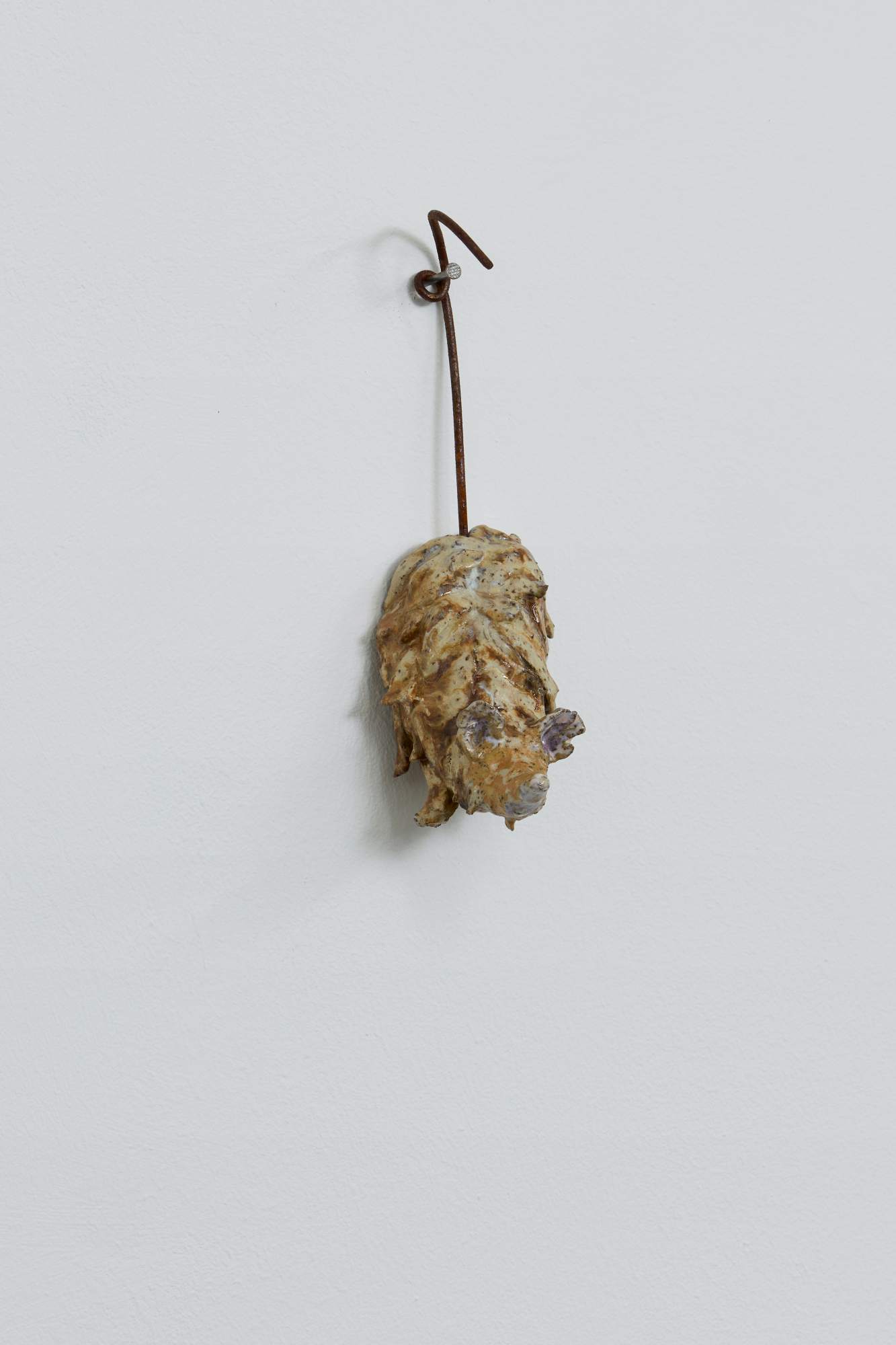
With his Mammoth Mouse, Gerrit Frohne-Brinkmann turns to hybrid creatures that blur familiar distinctions and echo recent scientific attempts to revive traits of extinct species. His ceramic sculpture combines a laboratory mouse with the fur of a mammoth, producing an organism that appears both plausible yet strangely displaced. The works reflects the human desire to rearrange nature, revealing how unstable the boundaries between evolution and contemporary invention have become.
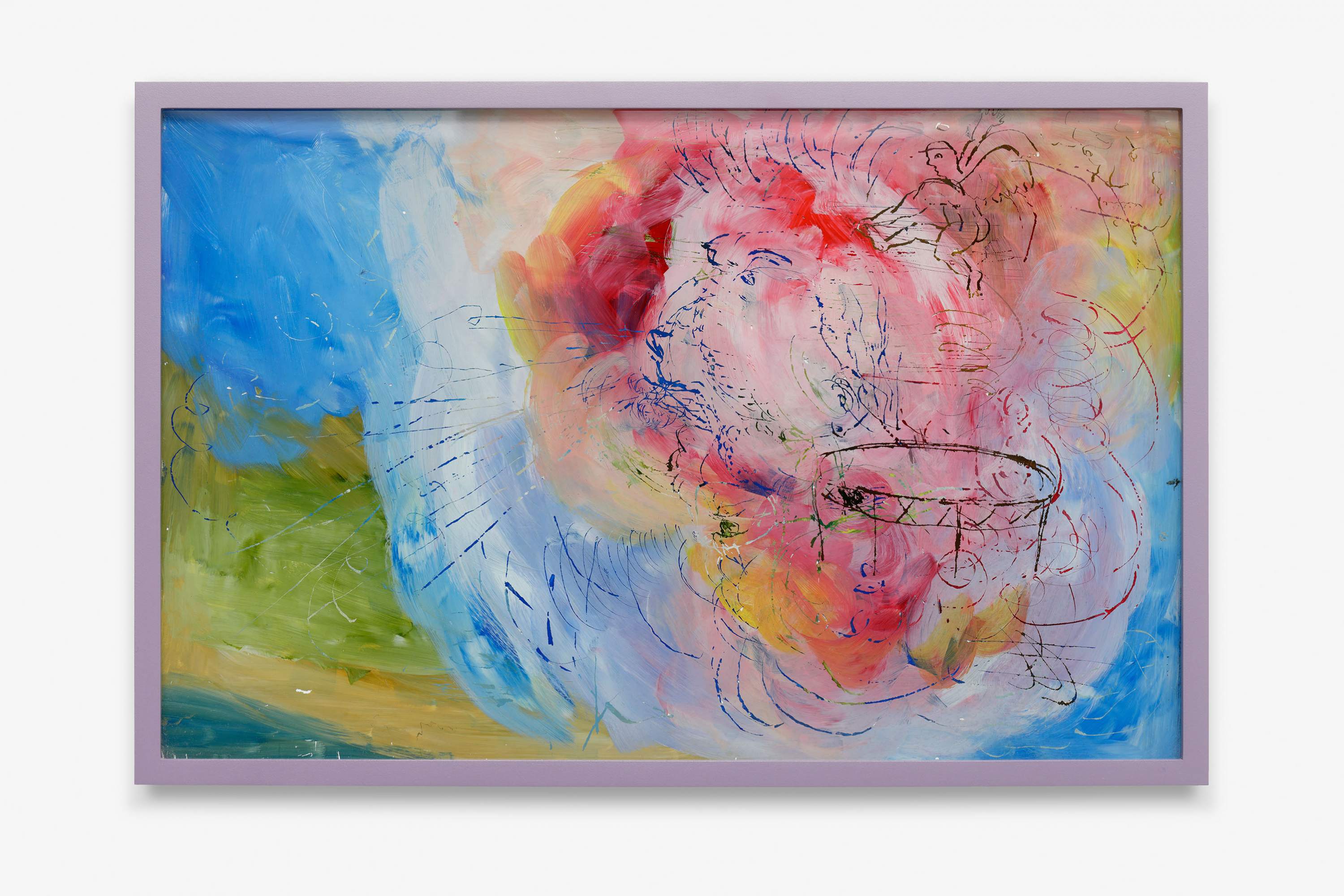
Matte Painting is a technique employed by artists using paints or pastels on sheets of glass to create background sets for film makers to shoot on locations not existing. It is a technological tool to create the illusion of place or a particular environment. Similarly, the depiction of clouds-as-heads-blowing wind, prevalent through art history, is an illusory tool, an attempt to animate (in the mind’s eye) an otherwise static image. Wind makes no distinction between animate and inanimate, wind is seen through the things it affects. Irina Jasnowski Pascual’s glass painting does not technically fulfill the purpose of the matte painting, it does not render a landscape but instead is groundless, like the figure hoovering in mid-air, but still needs the trampoline to bounce off of, like wind needs the world to blow onto and paint needs the glass to land onto.
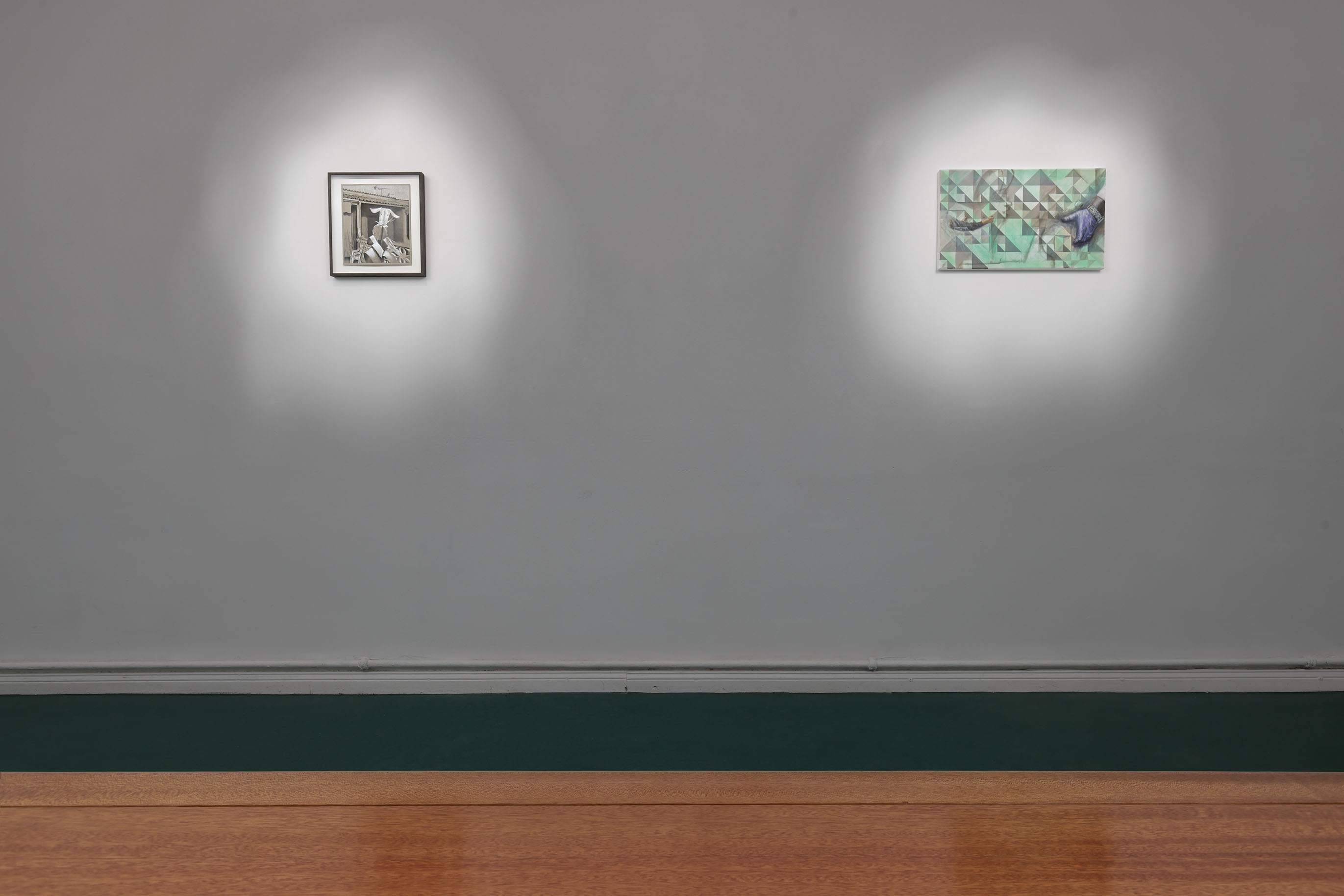
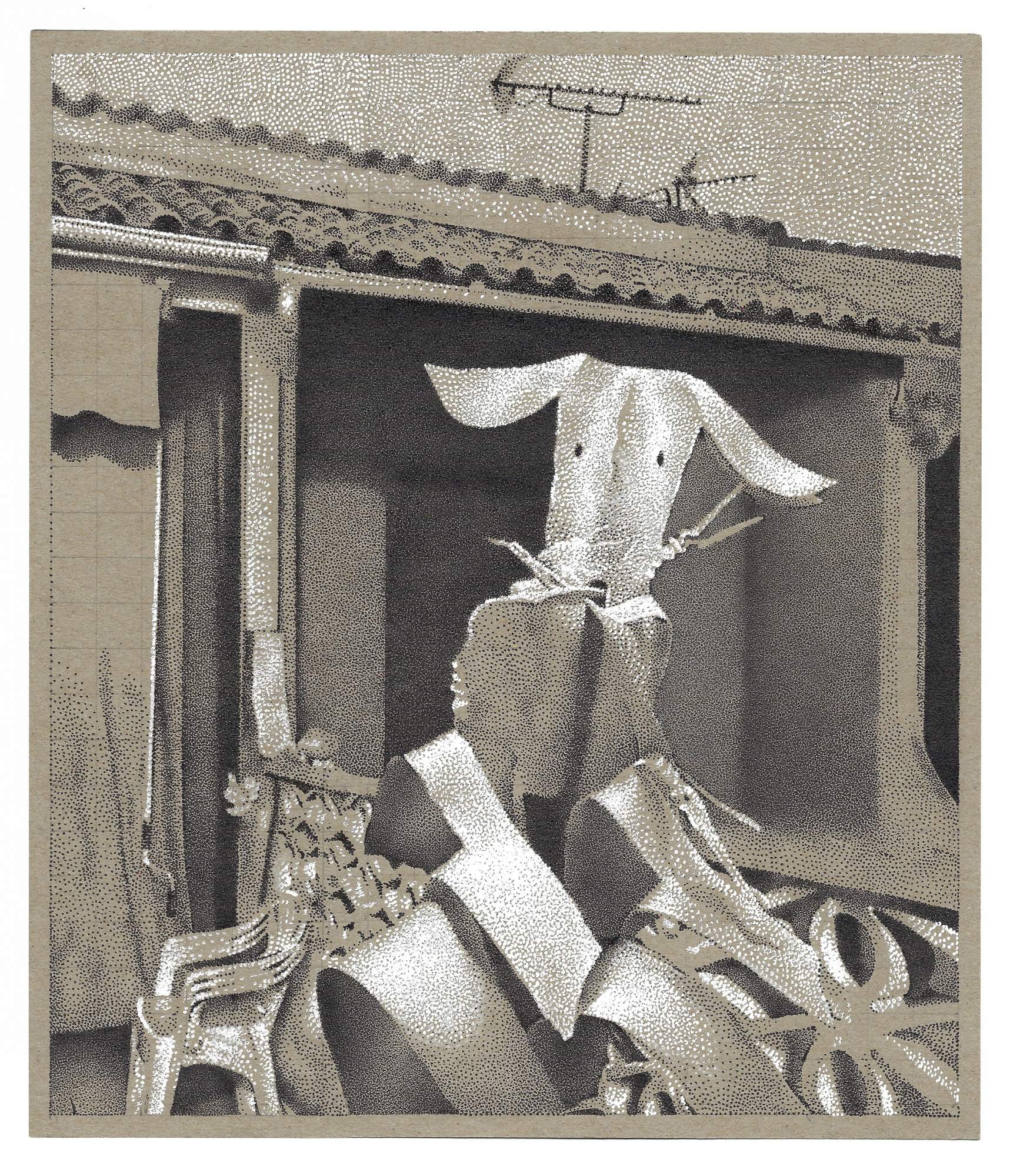
Xavier Robles de Medina’s work Ți-a ieșit iepurele în cale plays directly with the question of how a collective is defined. The title refers to a Romanian saying meaning “A rabbit crossed your path,” which signifies bad luck within that cultural context. The drawing is based on image of an origami rabbit and a background taken from a friend’s Instagram traveling through the south of France while the artist was in Romania. Created in 2020, it reflects on the global pandemic, a moment in which this “rabbit of bad luck” had crossed all our paths from Romania to Suriname and how it reshaped the very frameworks through which we imagine and form collectives.
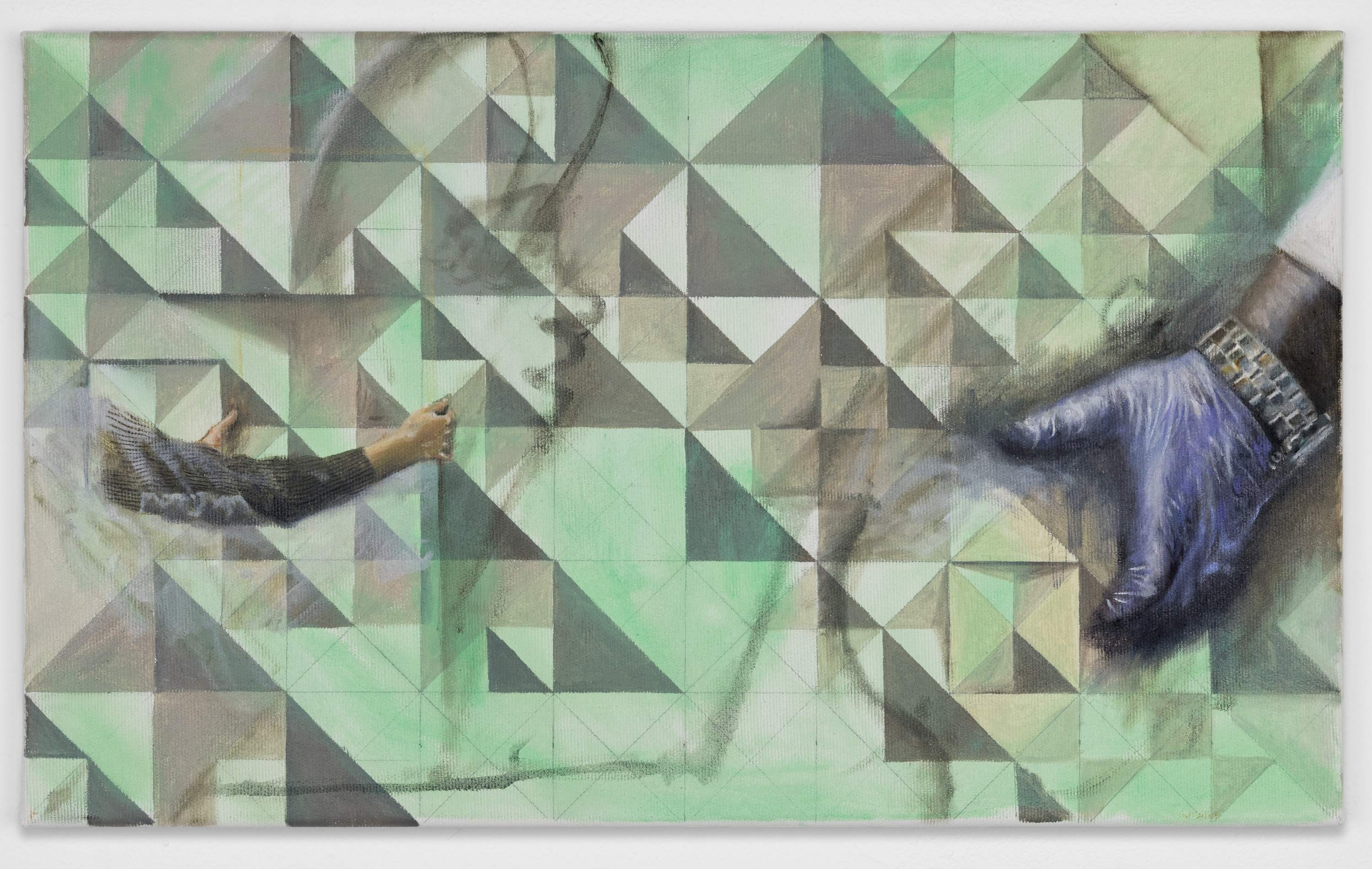
Next, the painting Untitled (handling) by Alison Yip shows two sets of hands handling objects that fade into the background. One can clearly see that the hands are holding something, yet what exactly this is remains concealed from the viewer. Through the differing perspectives on the hands, it becomes evident that they must be situated in different contexts, brought together in a single moment within the canvas. Even though we are not seeing the full situation we add the remaining pieces, in this case the artworks to explain the situation we are seeing. This is only possible through the memories we collected and can clearly differ to another viewer.
Josefine Reisch, meanwhile, relocates the image within its frame. On canvases printed with historical paintings, she renders hyperreal borders that nearly eclipse what lies beneath. Her gesture in Inversion (Café Terrace at Night) is both delicate and subversive: by foregrounding the decorative, she questions what counts as content, what remains seen, and who gets to frame history.
Together, the works show us how gestures, perceptions, and acts of handling are shaped by memory and experience. They draw attention to the subtle ways in which we relate to one another and to our surroundings, suggesting that connection emerges not through certainty, but through present acts.
(1) after Jan Assmann
May I Give You a Hand?Gerrit Frohne-Brinkmann, Irina Jasnowksi Pascual, Josefine Reisch, Xavier Robles de Medina, Miriam Umín, Eliza Wagener, and Alison Yip
-
-
 2/15
2/15Eliza Wagener Untitled (N.I.T.A.) 2025
Oil and ink on canvas 190 × 210 × 5 cm 74 3/4 × 82 5/8 × 2 inches -
-
 5/15
5/15Miriam Umiń Anlage 02, Replica of Bench from the Gemäldegalerie of the National Museums in Berlin (designed by Hilmer Sattler Architects, 1998) 2025
Meranti wood, pinewood, plate connectors, piano finish 50 × 300 × 70 cm 19 5/8 × 118 1/8 × 27 1/2 inches -
-
 5/15
5/15Irina Jasnowski Pascual The Wind Suffers of Blowing 2024
Acrylic on glass 27.5 × 42 cm 10 7/8 × 16 1/2 inches -
-
 4/15
4/15Gerrit Frohne-Brinkmann Mammoth Mouse V 2025
Glaszed ceramics, steel 21 × 6 × 9 cm 8 1/4 × 2 3/8 × 3 1/2 inches -
-
 5/15
5/15Xavier Robles de Medina Ți-a ieșit iepurele în cale 2020
Chromatic ink on paper 24 × 21 cm 9 1/2 × 8 1/4 inches 31 × 28.5 cm (framed) 12 1/4 × 11 1/4 inches (framed) -
 3/15
3/15Alison Yip Untitled (handling) 2025
Oil on canvas 30 × 50 cm 11 3/4 × 19 5/8 inches -
-
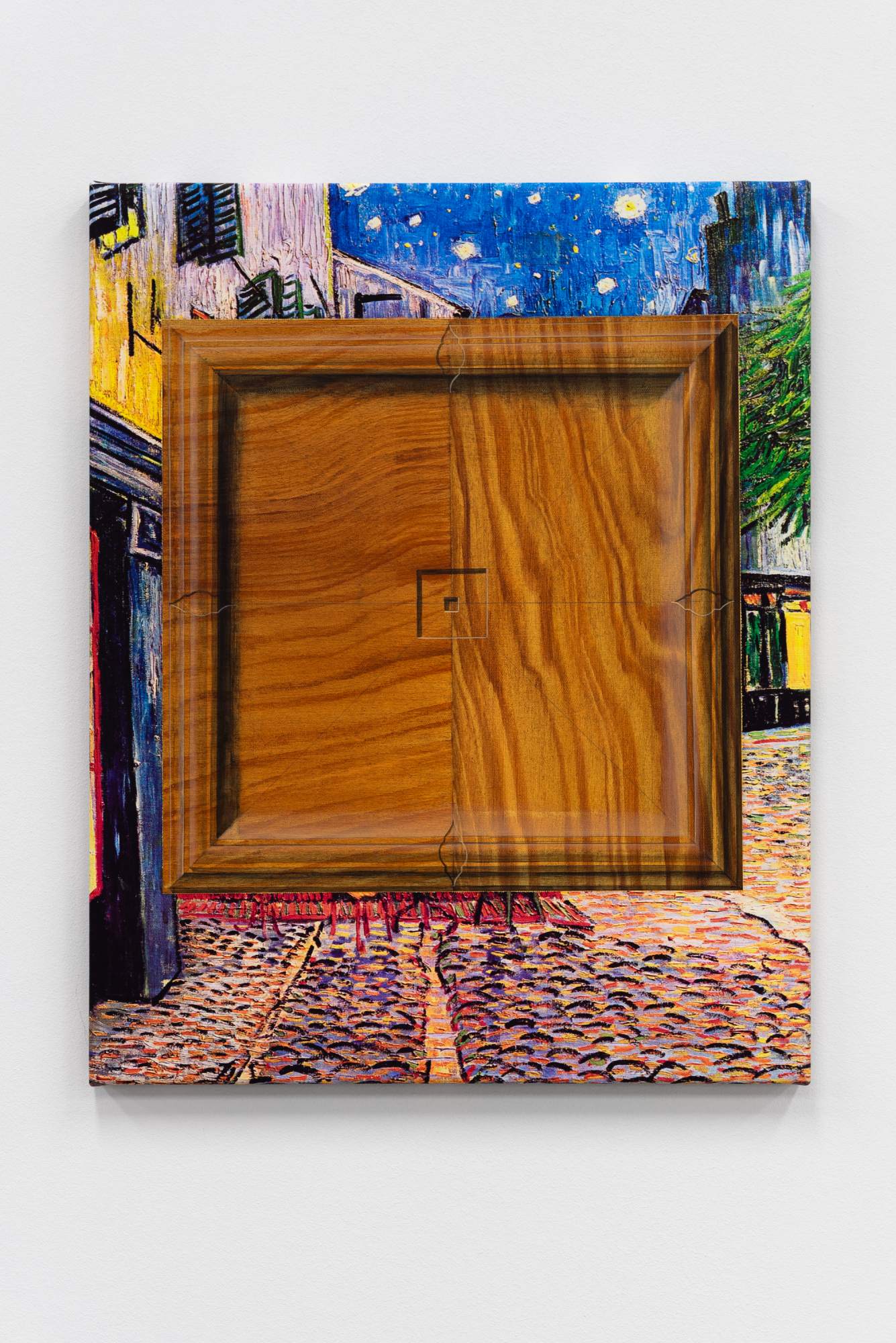 4/15
4/15Josefine Reisch Inversion (Café Terrace at Night) 2025
Oil and acrylic on printed canvas 50 × 40 cm 19 5/8 × 15 3/4 inches -
-
 4/15
4/15Miriam Umiń Anlage 03, Replica of Bench from the Gemäldegalerie of the National Museums in Berlin (designed by Hilmer Sattler Architects, 1998) 2025
Meranti wood, pinewood, plate connectors, piano finish 50 × 300 × 70 cm 19 5/8 × 118 1/8 × 27 1/2 inchesHans-Georg Gaul