"Anlage 01 and 02, Replica of Bench from the Gemäldegalerie of the National Museums in Berlin (designed by Hilmer Sattler Architects, 1998)”
by Miriam Umiń
In this edition of MEDIA, we highlight Miriam Umiń’s Anlage 01 and 02, Replicas of Bench from the Gemäldegalerie of the National Museums in Berlin (designed by Hilmer Sattler Architects, 1998) from Von Nagel zu Nagel, her final presentation at the Berlin University of the Arts in the summer of 2025 for which the artist, who works in Berlin and New Brunswick, was awarded the UdK Berlin Art Award in 2026. At the center of the work is the bench loaned from Berlin’s Gemäldegalerie, designed in 1998 by Hilmer Sattler Architekten, along with two replicas that Umiń produced as part of the project.
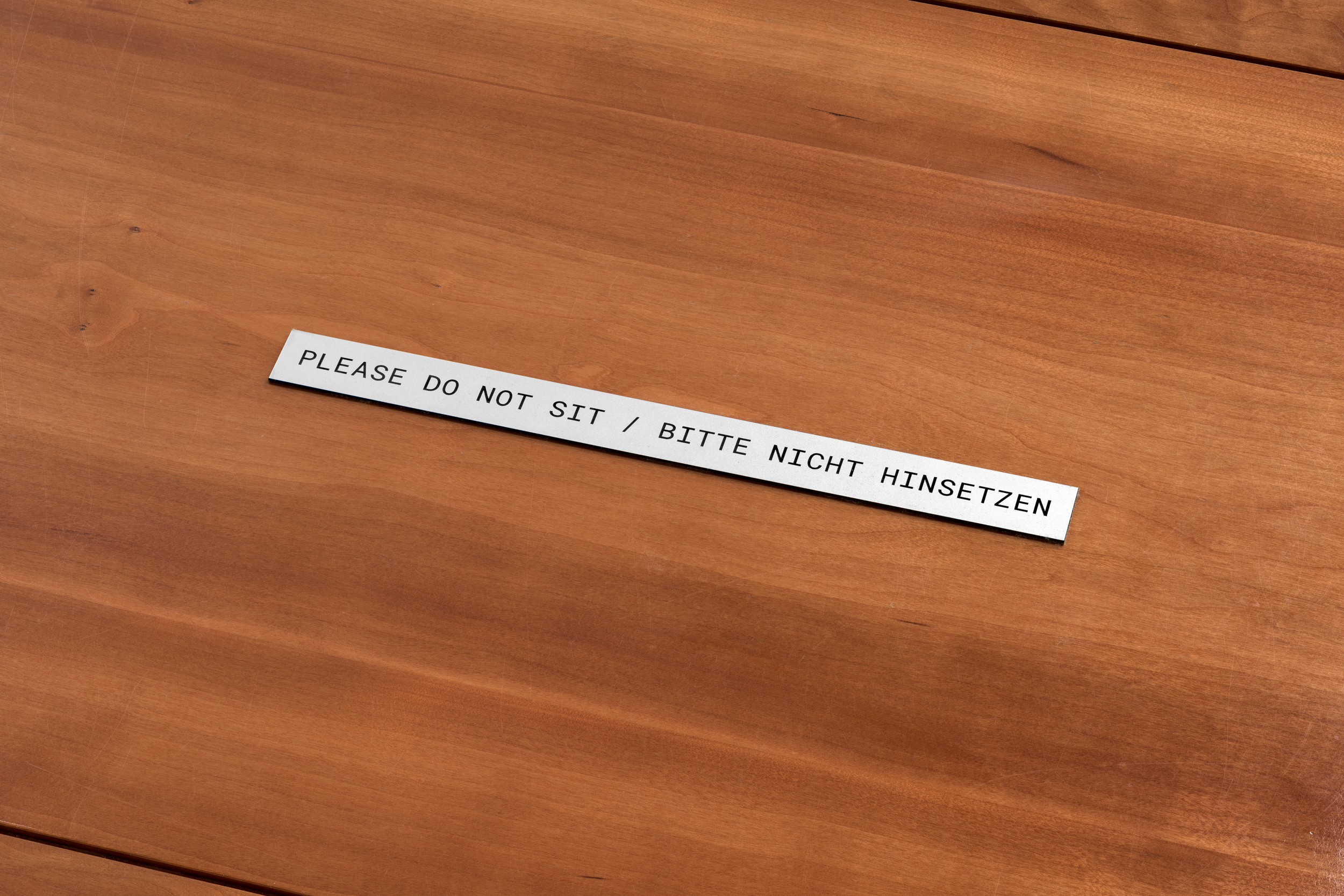
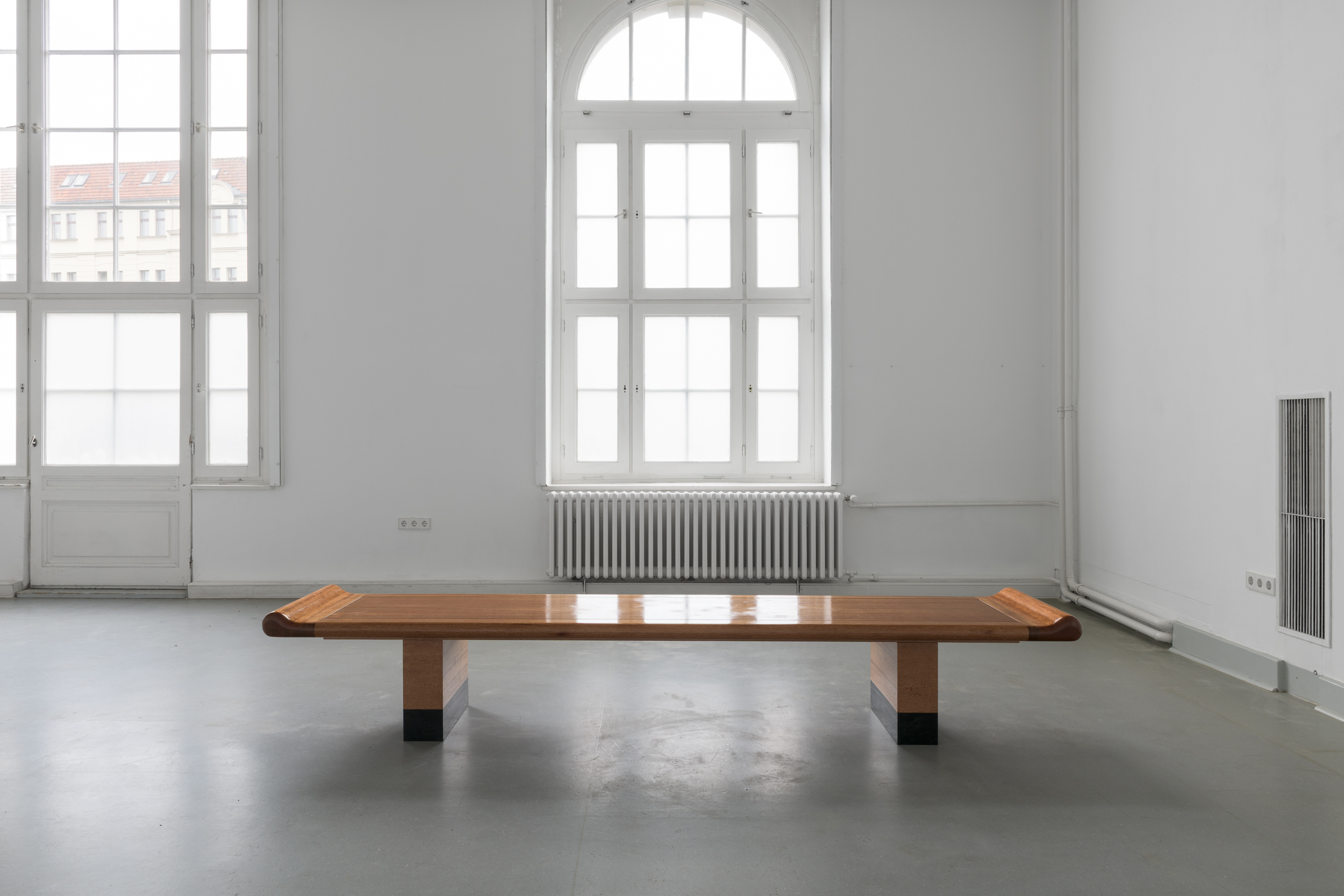
The museum bench stands in the middle of the room, yet rarely becomes the focus of attention. It is solid and functional, thoughtfully crafted and bears a quiet architectural presence, designed specifically for this setting. But above all, it is there to be used. In the Gemäldegalerie, visitors sit on it, rest, wait and look. The bench is the silent companion of the museum visit. It places the viewer within the space and makes lingering possible, while itself remaining largely unnoticed.
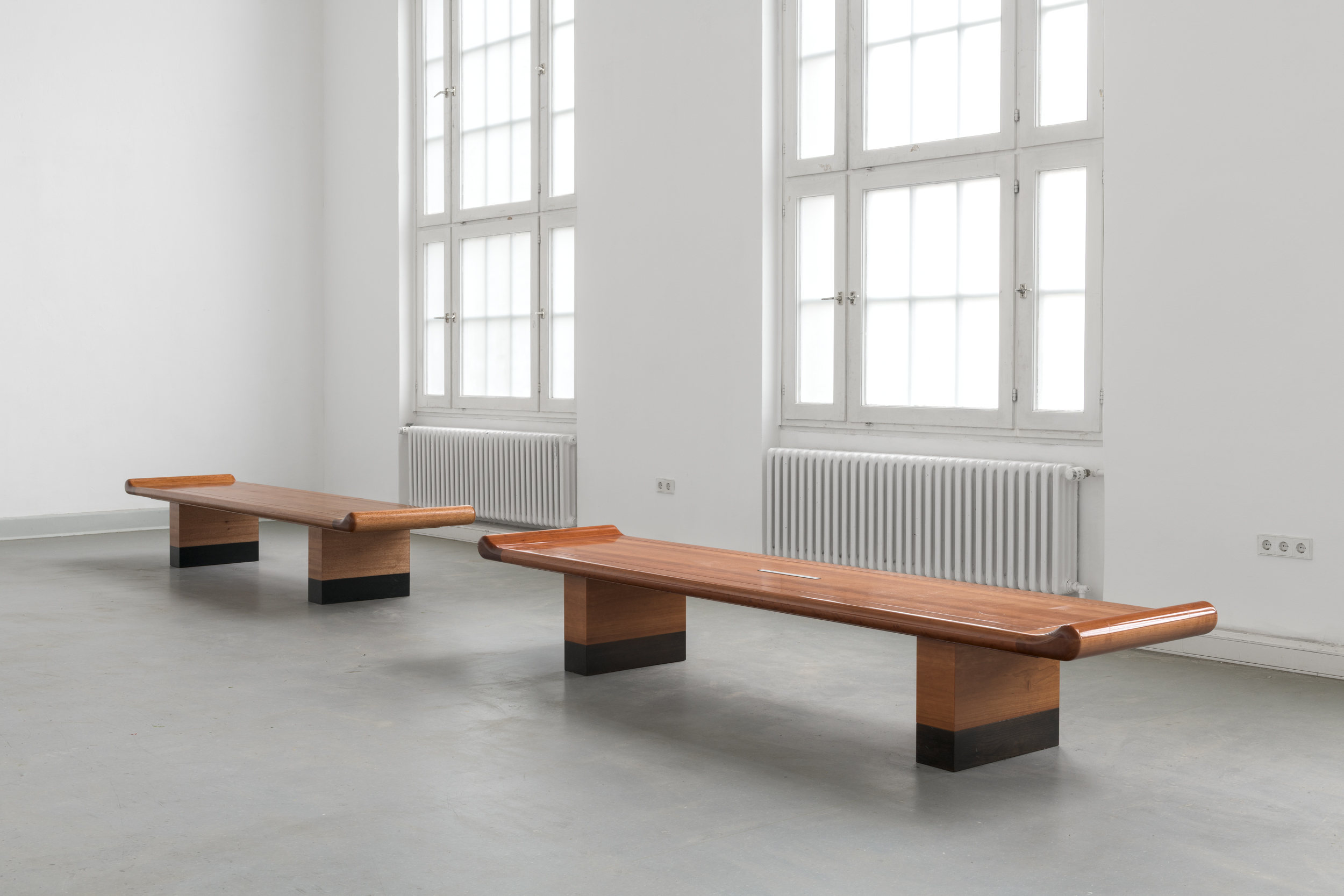
This taken-for-granted status begins to shift when the bench is moved to the art academy. When Umiń requested the loan, a contract had to be drawn up with the Gemäldegalerie. In this contract, the bench was not treated as an ordinary piece of furniture. Instead, it was handled as a loaned object with an insurance value, a defined purpose, transport requirements, a condition report, liability clauses and image rights. The contract assigned it an insurance value of 10,000 euros, prohibited any alteration to the object, regulated its packing and transport by a company qualified to handle art shipments, required invigilation and restricted the use of images. What can be touched and used casually inside the museum is suddenly administered, protected and tightly controlled once it leaves the institution.
Thus, through the loan, the status of the bench changes almost performatively. Removed from its everyday function within the Gemäldegalerie, it is suddenly treated, through contract, insurance and regulation, like a loaned object. What normally supports the act of viewership within the museum and acts as a place to sit, wait, and linger, steps out of the background and becomes an object of contemplation itself.
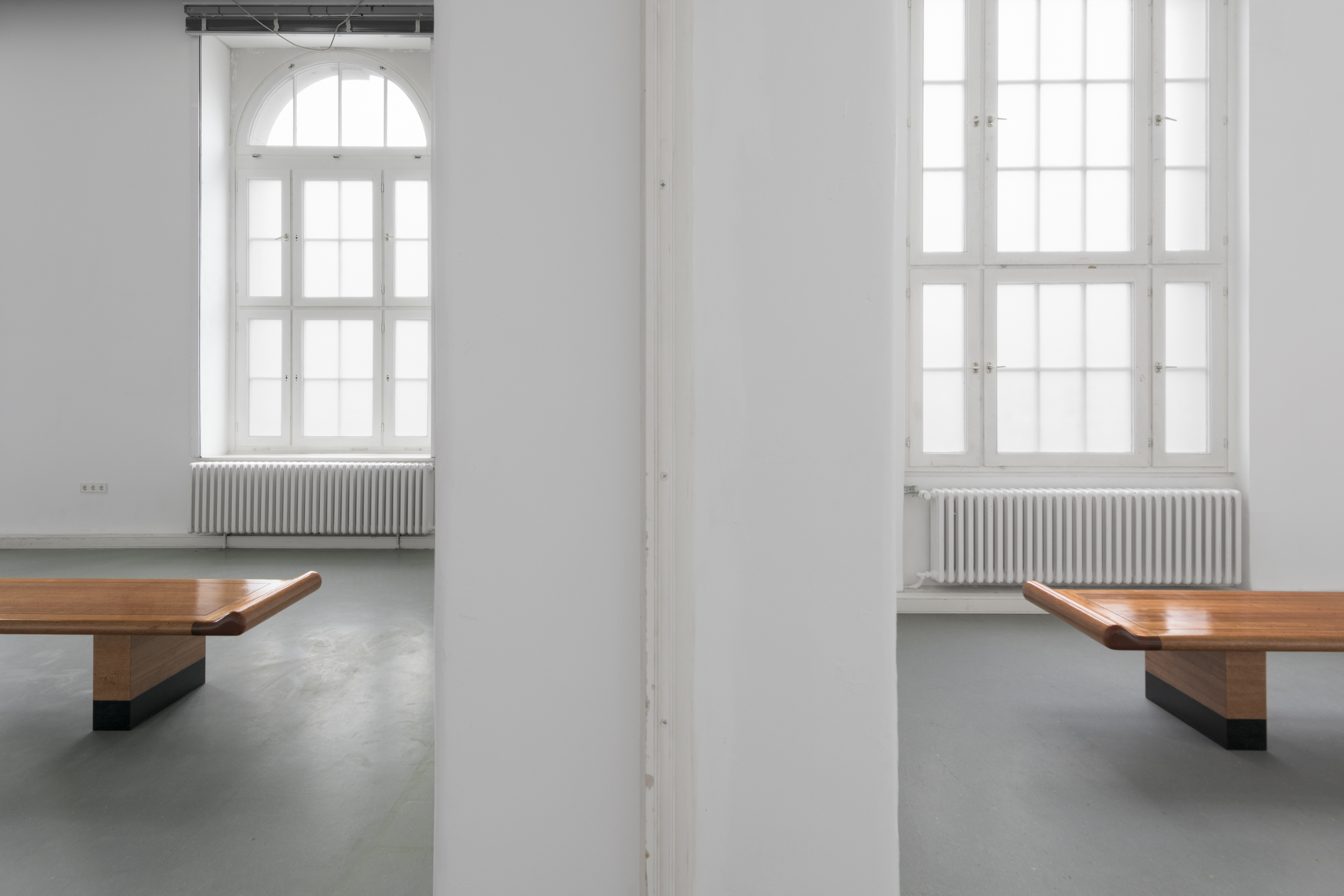
Umiń’s replicas respond precisely to this shift. They repeat the form of the bench, but not its institutional status. While the original, through its relocation, is treated as fragile, insured and controlled, additional benches appear. Ones that make the form available again, while also marking their distance from the original.
After all, the bench was never inaccessible. On the contrary, within the prestigious space of the Gemäldegalerie, it is there for everyone. Only outside this framework does it become protected and regulated. In this way, the work makes clear that the value of the object does not lie solely in its material, design or craftsmanship, but also in its provenance, contractual framing and institutional authority.
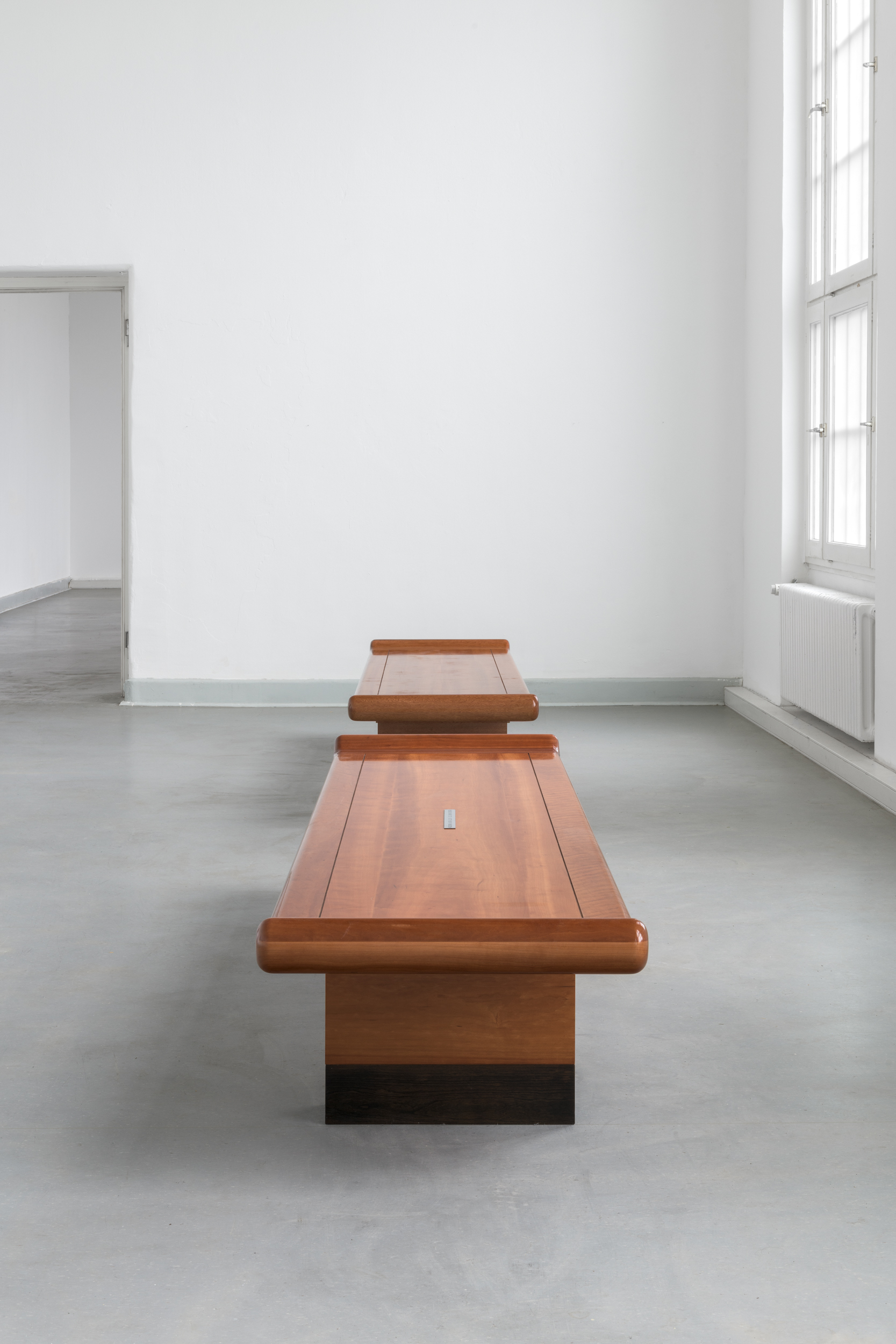
Von Nagel zu Nagel can therefore be read as a work about a paradoxical reversal. The original, once publicly available for use, becomes a protected object, while the copies, precisely because they lack the original’s institutional status, become usable again. In staging this shift, Umiń allows a space to emerge between the two benches in which questions of ownership, access, reproduction and value become visible through the changing status of the objects themselves.
If you would like to have insight into the loan agreement concerning the Gemäldegalerie bench, please email info@noahklink.com.